Kata The Art of Movement, Memory, and Discipline
The Essence of Kata
Kata: Preserving the Principles of Wado-Ryu
Kata are established sequences of movements through which generations of karate practitioners study technique, timing, balance, and control. Each form offers more than a pattern to memorize. Through careful repetition, students learn to coordinate the body and mind, refine their movements, and examine the principles that give each technique meaning.
In Wado-Ryu, kata are part of a living tradition. The same forms can reveal greater depth as a practitioner gains experience. Progress is measured not simply by the number of kata learned, but by the understanding, precision, and intention brought to their practice.
The Wisdom of the Founder
Quality Before Quantity
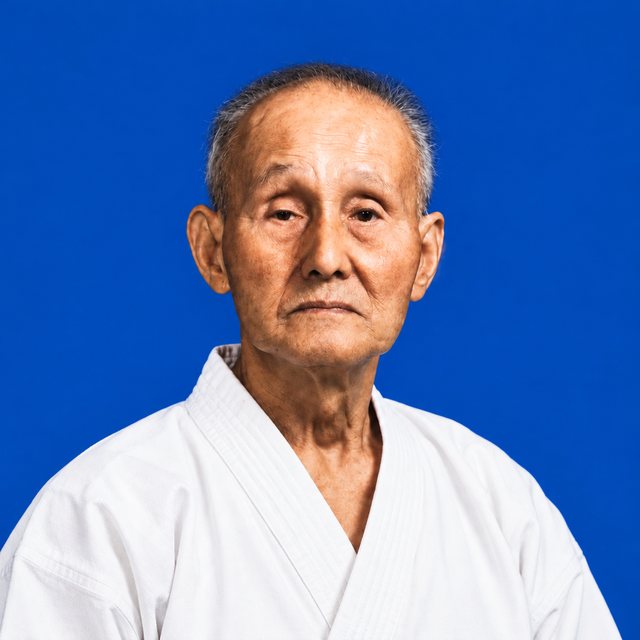
Hironori Otsuka, the founder of Wado-Ryu, emphasized the importance of studying kata deeply rather than collecting forms. His teaching is often summarized by the principle that quality matters more than quantity.
The Origins of Kata
The Roots of Karate Kata
The karate traditions of Okinawa are commonly associated with three principal centers: Shuri, Naha, and Tomari. Their names gave rise to the broad historical labels Shuri-te, Naha-te, and Tomari-te. These categories help describe the development of Okinawan karate, although the traditions influenced one another and cannot be separated into rigid technical systems.
Wado-Ryu draws substantially from kata associated with the Shuri and Tomari traditions. Seishan, often linked with Naha traditions, also holds an important place in its curriculum. Hironori Otsuka brought his own extensive training in Japanese jujutsu to the study and interpretation of these forms, giving Wado-Ryu its distinctive approach to movement, timing, and application.
The Pinan Kata
The Five Pinan Kata
The Pinan series provides an essential foundation for the study of Wado-Ryu kata. The five forms are Pinan Shodan, Pinan Nidan, Pinan Sandan, Pinan Yondan, and Pinan Godan. They develop coordination, changes of direction, stance transitions, and progressively more demanding combinations of movement.
The series is generally associated with Okinawan teacher Anko Itosu, although aspects of its earlier development remain debated. In other karate traditions, the same characters may be read as Heian. Many Wado-Ryu schools teach Pinan Nidan before Pinan Shodan because its movements are often considered more accessible to beginners. Teaching order can vary by organization.
The Nine Core Kata
Hironori Otsuka placed special emphasis on nine kata as a foundation for Wado-Ryu practice: the five Pinan forms, Kushanku, Naihanchi, Seishan, and Chinto. The historical emphasis on these nine forms should not be confused with a universal modern syllabus: Wado-Ryu organizations may teach additional kata and may arrange their curriculum differently.
These forms reward repeated study. The goal is not merely to reproduce their outward movements, but to deepen understanding of posture, body mechanics, rhythm, distance, and the transition between defense and response.
The Relationship of the Kata
The Relationships Among Kata
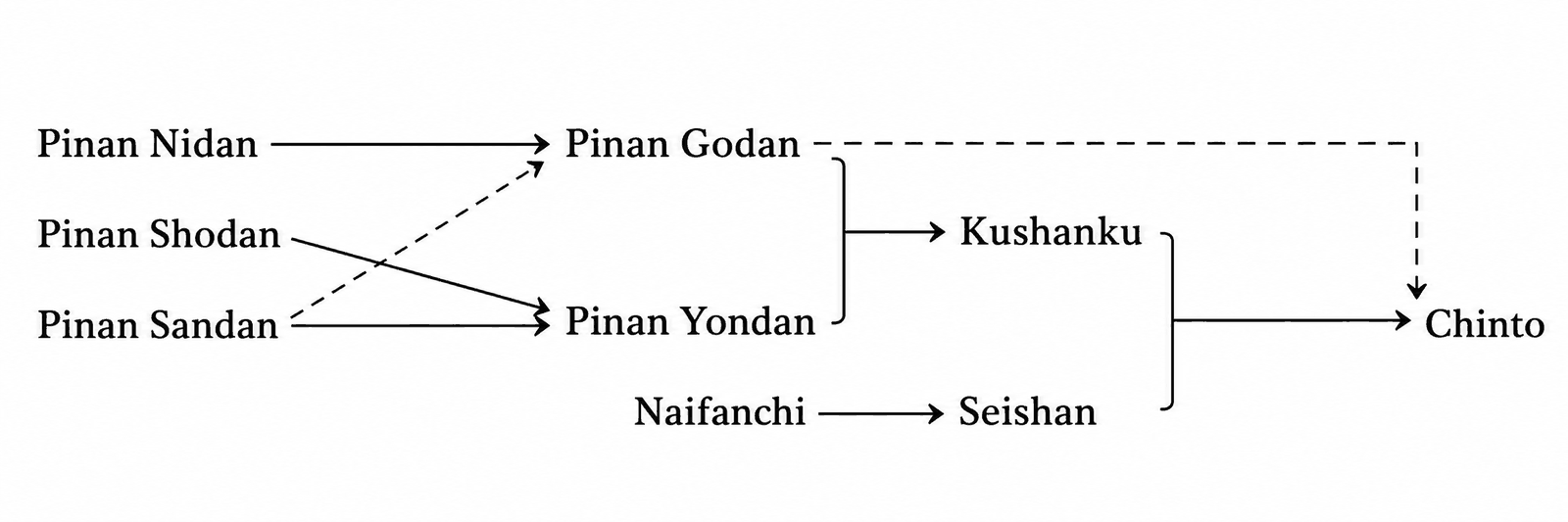
Wado-Ryu teacher and author Shingo Ohgami presented an interpretive diagram linking the Pinan forms with Kushanku and relating Kushanku, Naihanchi, Seishan, and Chinto. It is a useful way to explore connections between principles studied in different kata, rather than a literal or universally accepted historical genealogy.
Other Kata in the Wider Wado-Ryu Tradition
Depending on the organization and school, students may also encounter Passai (Bassai), Niseishi, Wanshu, Rohai, Jitte, and Jion. These kata form part of the broader repertoire associated with Wado-Ryu and its various teaching lineages.
Wado-Ryu Kata Video Library
The demonstrations below preserve forms as taught in the school’s video collection. They are organized into beginner, intermediate, and advanced groups for convenient viewing; these labels describe this collection and are not intended as universal Wado-Ryu rankings.
Beginner Kata
Four introductory Kihon Kata demonstrations introduce students to foundational movement, direction, posture, and coordination.
Kihon Kata Ipponme
First Form
Kihon Kata Nihonme
Second Form
Kihon Kata Sanbonme
Third Form
Kihon Kata Yonhonme
Fourth Form
Intermediate Kata: The Pinan Series
The five Pinan kata introduce a broad range of foundational principles. Repeated practice helps students improve fluency, balance, control, and the precision of their movements.
Pinan Shodan
Pinan Nidan
Pinan Sandan
Pinan Yondan
Pinan Godan
Advanced Kata
These demonstrations present four of the core kata emphasized by Hironori Otsuka. Each invites continued study of the relationship between technique, timing, and efficient movement.
Naihanchi
Kushanku
Chinto
Seishan
Practice, Study, and Preservation
Kata are passed from instructor to student, but their meaning develops through thoughtful training. By returning to established forms with patience and attention, practitioners help preserve Wado-Ryu’s heritage while deepening their own understanding of the art.